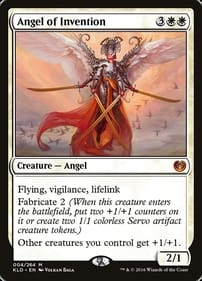

Wizards of the Coast has reversed its earlier decision on The Zeta Set. The twelve cards printed at common for the first time in that Secret Lair release will be legal in Pauper, with two exceptions banned right away.
What The Zeta Set is
The Zeta Set is a Secret Lair release. Every card in it is a reprint, so under normal circumstances it would not affect competitive formats at all. The wrinkle is that twelve of its cards appear at common rarity for the first time in Magic's history.
Those twelve cards are:
- Dispatch
- Return to Dust
- Serra Angel
- Narcomoeba
- An Offer You Can't Refuse
- Cut Down
- Sengir Vampire
- Price of Progress
- Vandalblast
- Gigantosaurus
- Baleful Strix
- Soul-Guide Lantern
Because Pauper legality is determined by whether a card has been printed at common, these twelve cards raised an obvious question.
Why Wizards said no at first
The Pauper Format Panel and Wizards initially decided these cards would not be legal. They gave three reasons.
The first was power level. Several of these cards would push existing decks past what the format can handle, and the panel did not expect most of them to make Pauper more fun.
The second was design intent. Every other Pauper-legal card in Magic's history was placed at common by a designer who judged that common was the right rarity for that card's gameplay. The rarities in The Zeta Set were not assigned with gameplay in mind, and changing format legality was never the goal.
The third was predictability. If Secret Lair releases could add cards to Pauper at unpredictable times, players preparing for tournaments would have a moving target to track.
Why they changed course
Community response over the following week pushed back hard on all three points, and the panel reconsidered.
On design intent, Gavin Verhey acknowledged that the distinction makes sense inside Wizards but not to players. From a player's side, rarity is the one governing truth of the format. A C at the bottom of a card is verifiable by looking at the card, and that has been the rule for as long as Pauper has existed.
On predictability, the panel worked out an arrangement with the Secret Lair team. Any future cards downshifted to common will be shown to the panel in advance. That is not a veto, but it means the panel can give feedback. Wizards also confirmed that randomized booster products are not on the Secret Lair roadmap at this time.
On power level, the panel decided the answer was not to exclude a whole product category. Pauper already has a tool for individual cards that are too strong, and that tool is the banned list.
The two immediate bans
Narcomoeba is banned. Spy decks are already strong in Pauper, and Narcomoeba has a long history of working with Dread Return, which is legal and played. The panel removed it preemptively rather than waiting to see the damage.
Price of Progress is banned. Red aggressive decks have been among the strongest in the format for a while, and a card that regularly deals six or more damage for two mana is an inappropriate rate, especially in multiples.
The four cards on watch
The remaining ten cards are legal, but four of them are being watched closely. The panel's reasoning is that these cards are powerful without making games end faster, which is why they get a trial run instead of a ban.
Baleful Strix points the format further toward long grinding games. It trades with big threats like Tolarian Terror and recycles easily with Blood Fountain or Ninja of the Deep Hours. The panel expects it may also enable new decks, which is why it gets time, on a short leash.
Vandalblast is a strong sideboard card against Affinity, clearing creatures, support artifacts and even lands. Affinity's indestructible Bridges insulate much of its mana, and the deck rebuilds well and has Elemental Blasts to fight back. Given how long Affinity has sat near the top of the metagame, another answer to it may turn out to be appropriate.
Dispatch and Cut Down are best-in-class removal. With artifact lands as common as they are, Dispatch often functions close to Swords to Plowshares. On the other hand, players have asked for a strong white removal spell for a long time, and it may help answer cards like Writhing Chrysalis and Sneaky Snacker.
What to expect next
Verhey set expectations directly: the format will be less stable for the next few months, and he would not be surprised if cards get banned in October and December 2026 as a result.
The October 12, 2026 update will address anything that is immediately a problem. The December 2026 update will take another look once those changes have settled. If you are building for an event, plan around the possibility that the watch list cards may not last.
Our take
We agree with the decision. Pauper works because the rule fits in one sentence: if it's a common, you can play it. Product-by-product exceptions just make life harder for everyone, and for no good reason. We'd like to hear what you think about the reversal. Do you see the metagame shifting here in Quebec City?
Source :
https://magic.wizards.com/en/news/announcements/on-the-zeta-set-in-pauper